
Written and designed by
Pamela Blanche, Outreach Technician at ISGlobal
March 3, 2026
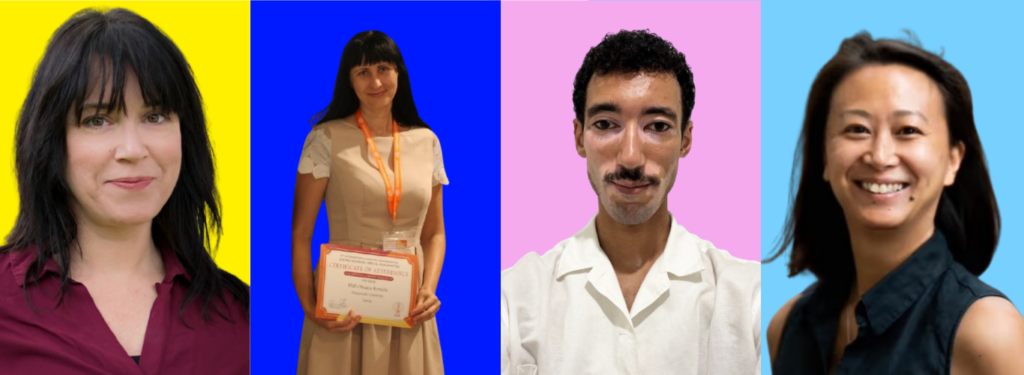
Meet four dedicated professionals working at PULSE-ART, a European initiative developing a Competence Framework for Cultural Awareness and Artistic Expression through arts-based education. Iro Voulgari (Malta), Oksana Kovzele (Latvia), Yanis Ratbi (France), and Julie Ng (Netherlands) bring expertise spanning game-based learning, dance education, digital arts, and project management to implement innovative case studies across seven countries. Through diverse art forms they are co-creating inclusive educational pathways that bridge culture, technology, and social transformation.
_________________________________________________________________________________
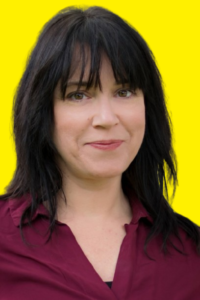 Iro Voulgari
Location: Msida, Malta
Job title/Organisation: Postdoctoral Researcher specializing in Game-Based Learning and Game Jams at the Institute of Digital Games of the University of Malta
What is your role in the project?
I am part of the team leading the development of the Competence Framework for Cultural Awareness and Expression. My role involves translating policy and research on cultural competences into a coherent pedagogical structure that can guide educational design, training, and assessment across formal and non-formal learning contexts. I also contribute to the design, organisation, and research of our case study– a game jam.
Why is PULSE-ART important?
PULSE-ART addresses a critical gap in European education: while “Cultural Awareness and Expression” is a key EU competence, it hasn’t been systematically operationalised into measurable, teachable dimensions. The project brings together researchers, educators, and cultural professionals to reimagine this competence for the 21st century, linking artistic practice, cultural participation, and digital transformation. In this sense, PULSE-ART helps bridge culture, education, and technology to support inclusion, creativity, and active citizenship.
What’s exciting about PULSE-ART?
What excites me most is its interdisciplinary and humanistic spirit. We’re combining insights from arts in education, digital innovation, and cultural policy to create a living framework that can be applied in classrooms, museums, community projects, and digital spaces. The collaboration across European partners – each bringing different cultural and educational traditions – creates a very vibrant environment where ideas truly evolve. It feels like co-creating a shared European language of creativity and expression.
What´s the challenge of your case study?
Our case study focuses on the design and development of digital games through a participatory, collaborative, and co-creative approach. One key challenge is ensuring that these activities are inclusive and context-sensitive, so that all participants regardless of background, can see their culture and background reflected and valued. Another challenge lies in developing assessment approaches that respect the personal and affective nature of such creative processes, while still allowing us to understand its learning, social, and affective impact.
Fun fact
Whenever I travel, I try to visit at least one local museum. I think that even the tiniest museum hides great stories and connects me to local traditions and history. I also like to watch a local TV station, as a small cultural souvenir.
_________________________________________________________________________________
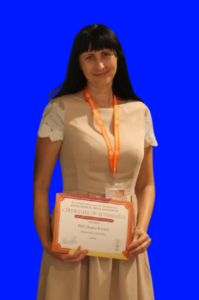 Oksana Kovzele
Location: Daugavpils, Latvia
Job title/Organisation: Senior Researcher specializing in comparative literature and cultural studies at the Institute of Humanities and Social Sciences of Daugavpils University
What is your role in the project?
I am responsible for creating the infographics and Excel database resulting from the mapping exercise of existing Competency Frameworks. Additionally, I will be one of the organizers of a case study in Latvia called DANCE and will review documents connected with evaluation. I have a lot of work to do, but I’m really happy to be a part of this huge project and this international team.
Why is PULSE-ART important?
This project is very important because one of our aims is to create a communication space to prove that arts are not only for professional artists or art educators, but for everyone who wants to be more open, creative, and inclusive. We want to show participants that it’s possible to use the language of arts to share knowledge and learn something new. Through this project, all participants—organizers, educators, and learners—can become more open, tolerant, inclusive, and happy. In our contemporary situation with conflicts and wars, we can use the arts as a common language to make our lives safer despite our differences.
What’s exciting about PULSE-ART?
The most exciting thing is the co-creation process—different activities and workshops where we can share our ideas that are born spontaneously. Each of us contributes our ideas to this common puzzle. After the final phase of the project, this puzzle will be shared with everyone, so anyone will be able to add their small piece to it.
What’s the challenge of your case study?
We have several challenges in our Dance case study in Latvia. The first challenge is the organizational aspect, as it’s the first time for our team. The second challenge is how to involve diverse participants from different ethnic backgrounds and social groups—motivating them to participate and finding a common language through dance. How can these diverse people be united during our case study? The final challenge is evaluation: we need to develop a specific methodology to measure our results and prove whether they are effective or not.
Fun fact
The funniest episode from my life happened two days ago when I was traveling here to Greece. We had two flights: Riga to Frankfurt, then Frankfurt to Thessaloniki. At Riga airport, we discovered check-in problems, and the administrator warned us we might have issues in Frankfurt. When we reached Frankfurt, our team was running frantically to reach the check-in post. You can imagine this fun picture: three women—three researchers, three scientists—running with all their baggage through the airport. We are so serious as researchers, but this situation was really fun!
_________________________________________________________________________________
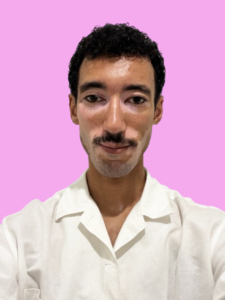 Yanis Ratbi
Location: Paris, France
Job title/Organisation: Artist and Project Officer at the Institute for Research and Innovation
What is your role in the project?
I’m on the team responsible for the project’s impact. Our goal is to ensure the project reaches its Cultural Awareness and Expression (CAE) objectives by measuring the efficiency of our methodologies and adapting them when needed. As an artist working at IRI, I’m also leading the case study on video games, exploring how this medium can facilitate CAE.
Why is PULSE-ART important?
I think PULSE-ART is important because it will bring people together around art and culture, but also—which is one of my biggest concerns—it will focus on every type of expression of art and culture, more importantly the marginalized ones and those from minorities.
What’s exciting about PULSE-ART?
I think what is exciting about this project is that it brings together people from very diverse places with different expertise on art. It’s a great experience to share with people across Europe but mostly to discover their case studies and build bridges between them.
What´s the challenge of your case study?
My case study is related to video games, so I think one of the challenges is to first make it clear that it is an art and deconstruct the idea that video games are only a product of consumption. Other challenges would be assesing the creative expression while acknowledging the cultural diversity of participants, to make sure we have the right balance and measurement tools, but I’m confident about it.
Fun fact
Something funny is that I have a twin brother that looks exactly like me.
_________________________________________________________________________________
 Julie Ng
Location: Amsterdam, Netherlands
Job title/Organisation: Project Manager at the Waag FutureLab
What is your role in the project?
As Waag, we have the lead in Work package 4: Implementation of the case studies. My specific role is project manager. I am responsible for ensuring the quality of our outputs, aligning all activities with Waag and PULSE-ART values, and safeguarding a healthy balance between quality, budget, and time. I monitor progress, and make sure the work stays coherent, feasible, and impactful throughout the project.
Why is PULSE-ART important?
With PULSE-ART we want to explore how art can improve and strengthen cultural awareness and expression. This is important as it contributes to solidarity, a more inclusive and interconnected society.
What’s exciting about PULSE-ART?
I am very excited about the case studies that are planned for this year. Different art forms will be used in seven countries in different educational settings. Since the art forms are so different—from illustrations to dance, from music to video games—I am very excited to see what will be created at the end of the case studies.
What´s the challenge of your case study?
In our case study we will be working with the art form of performance arts/live arts. This art form might be a challenge when working with young people who do not have much experience with this specific art form. Having said that, we aim to work with artists specialized in performance arts/live arts to give them proper guidance.
Fun fact
I love cooking and I love food. When I organize elaborate dinner parties, usually consisting of four to five courses, I like to make drawings of how these dishes should be plated.