One Hundred Children Waiting for a Train (1988) Ignacio Agüero
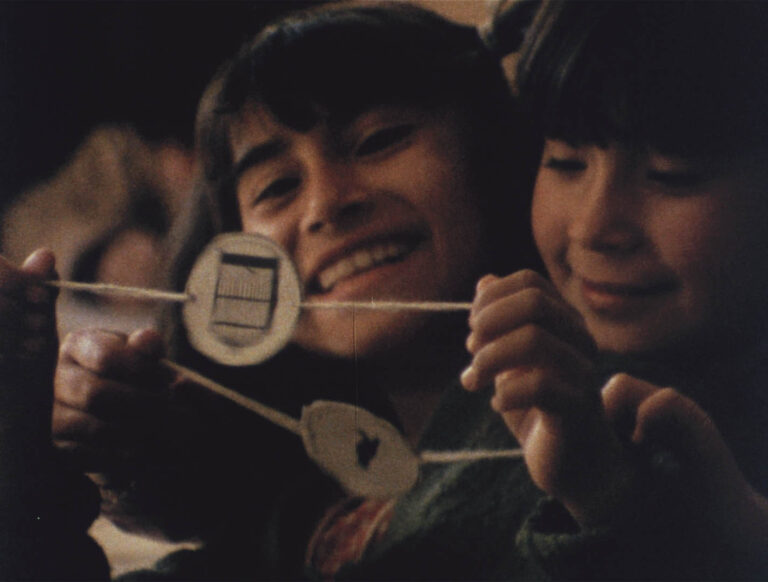
Image source: americas.dafilm.com
 Written and recommended by
Francisca Casas-Cordero, Outreach Technician at ISGlobal
March 3, 2026
In One Hundred Children Waiting for a Train, Ignacio Agüero documents the singular pedagogical experience led by Alicia Vega in Lo Hermida, Santiago de Chile, during the final years of Pinochet’s dictatorship. The film portrays children, most of whom had never set foot in a movie theater, encountering cinema for the first time. Over the course of a year, Vega introduces her students to the history and principles of filmmaking through creative, hands-on activities, using modest resources to build optical devices and craft their own “films.” Agüero’s camera quietly observes the participants’ growing fascination and awakening curiosity.
Beyond its documentary value, the film stands as an act of cultural resistance. In a climate of censorship and political repression, Vega’s initiative affirms art and imagination as instruments of freedom. The work transcends the educational sphere, reflecting on art’s capacity to expand horizons and to imagine futures otherwise foreclosed. Its enduring relevance reminds us that arts education is fundamental to building more just and critically aware societies.
Quick facts
- Title: One Hundred Children Waiting for a Train
- Director: Director: Ignacio Agüero
- Year: 1988
- Language: Spanish (English subtitles available in some versions)
- Theme: Art based education, childhood, community cinema, cultural resistance
- Recommended platform for watching it: americas.dafilms.com
What is the connection with CAE?The film is linked to CAE insofar as both understand arts education not as a technical supplement, but as a situated cultural practice. One Hundred Children Waiting for a Train demonstrates that cultural innovation does not depend on technological sophistication, but on pedagogical mediation, collective work, and the building of community. Just as Alicia Vega activates the audiovisual language with minimal resources, CAE proposes that access to art cannot be reduced to the availability of tools or devices; rather, it requires critical literacy, active imagination, and meaningful participation. In a context marked by audiovisual overexposure on social networks and persistent inequality, the film insists that access to the audiovisual language, like access to other arts, could be accompanied by critical literacy, active imagination, and meaningful participation. |